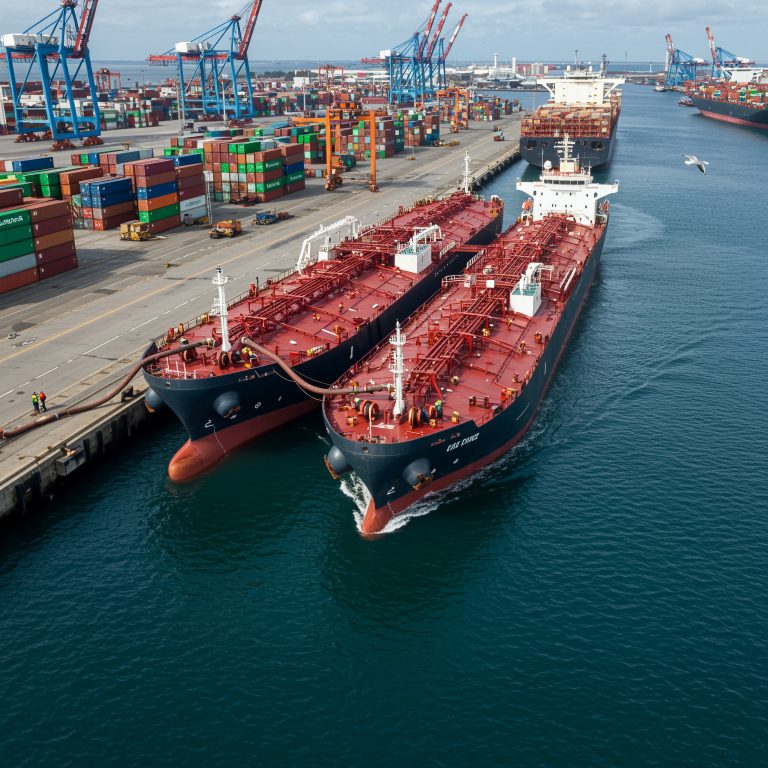
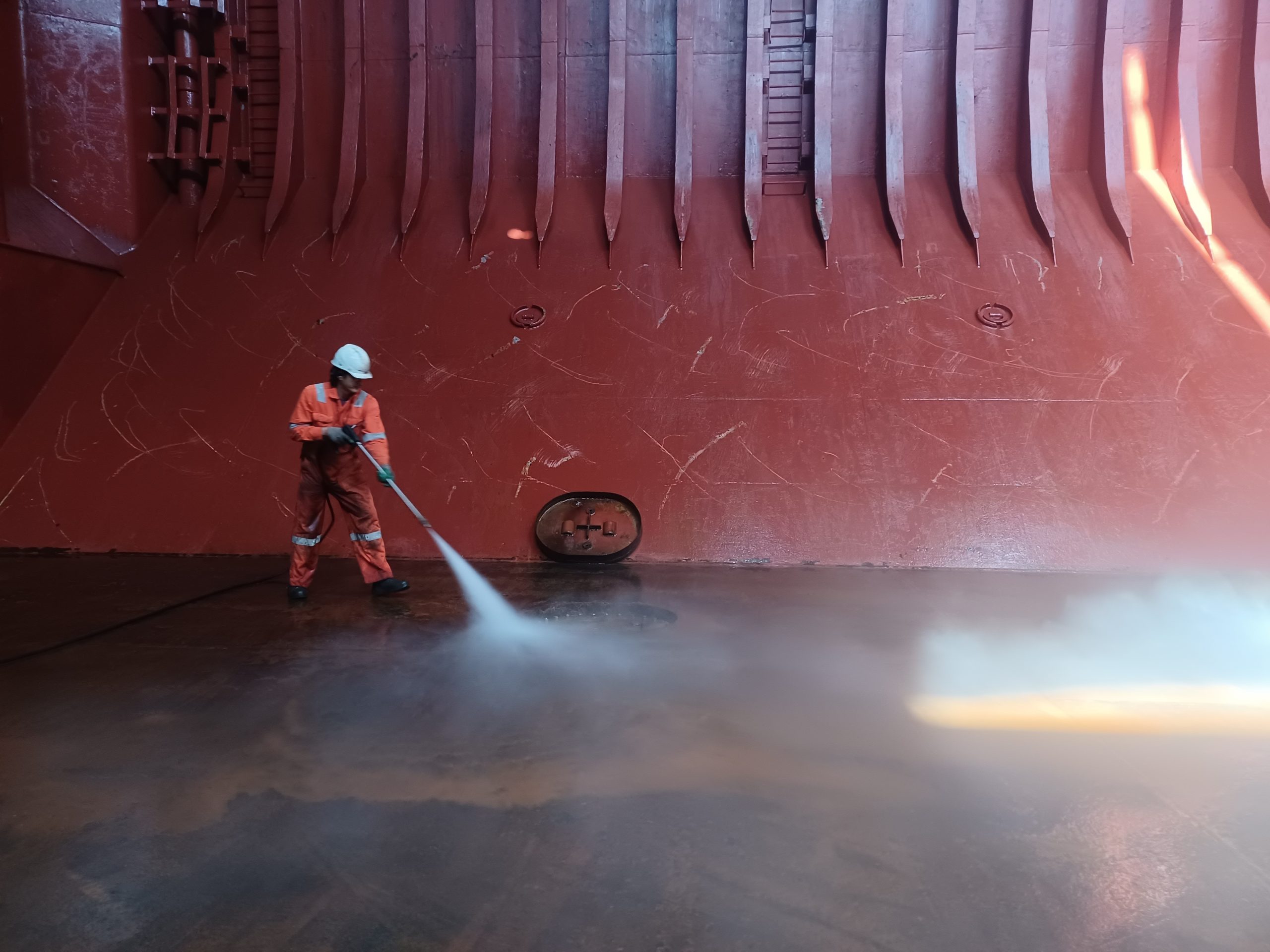
Changing a tanker from one cargo grade to another looks like a cleaning job. It is really three jobs at once: a cleaning operation to a defined standard, a safety-critical enclosed space operation, and a documentation exercise that has to satisfy the next charterer and, frequently, an independent surveyor. Treating any one of the three as secondary is where changeovers go wrong.
Start from the standard, not the method
The first question is not how the tanks will be washed. It is what the next cargo requires. A changeover from a heavy residual grade to a clean petroleum product is a different exercise from a changeover between compatible grades, and a changeover into a sensitive chemical or vegetable oil cargo is different again.
The required end state drives everything downstream: the wash medium, the number of cycles, whether chemical cleaning is needed, what wall wash tests will be run, and what the acceptance criteria are. Agreeing the standard in writing with the charterer before work begins prevents the most expensive outcome in this business, which is a tank rejected on arrival.
The cleaning operation
Washing
Modern cargo tank washing generally uses fixed or portable machines that deliver a programmed pattern of water jets, hot or cold, sometimes with a chemical additive. Coverage matters more than pressure: shadowed areas behind structure are where residue survives.
Residues, slops and MARPOL
What comes out of the tank is regulated. Oily residues and tank washings fall under MARPOL Annex I, and noxious liquid substances under Annex II, with prewash and discharge requirements that depend on the substance category. Slops have to be retained, transferred to an appropriate reception facility, or handled in accordance with the applicable annex, and the operation has to be recorded.
The record book entries are part of the job, not an administrative afterthought. Port state control inspections regularly focus there.
Coating protection
Cargo tank coatings, whether epoxy or zinc silicate, have chemical resistance limits. A cleaning chemical or a temperature chosen for speed can shorten the life of a coating system that costs a great deal more than the time it saved. The cleaning plan should be checked against the coating manufacturer’s resistance list before it is executed, not after a blistering problem appears.
Enclosed space entry: the part that harms people
Cargo tanks are enclosed spaces, and enclosed spaces continue to kill seafarers and shore personnel. The atmosphere inside a tank can be oxygen deficient, flammable, or toxic, and it can change during the work. Entry therefore requires a permit-to-work system, atmosphere testing before and during entry, continuous ventilation, a trained attendant at the entrance, communication, and rescue equipment ready rather than stored.
The most dangerous moment is usually not the planned entry. It is the unplanned one, when somebody puts their head in to check something.
Inspection and gas-free certification
Once cleaning is complete, the tank is inspected and tested against the agreed standard. Where the next operation requires it, a competent person issues a gas-free certificate confirming the atmosphere is safe for the intended purpose, which may be entry, hot work, or both. A gas-free certificate is time-bound and condition-bound; it describes a tank at a moment, not permanently.
Alongside it, a certificate of cleaning and inspection documents what was done and to what standard, supported by photographic evidence and test results.
The documentation that closes the job
- Cleaning procedure and the standard agreed with the charterer
- Atmosphere test records and the entry permits issued
- Wall wash or other acceptance test results, where applicable
- Slop handling and reception facility receipts
- Certificate of cleaning and inspection, and gas-free certification where required
- Photographic record of each tank on completion
That package is what allows a surveyor to approve the vessel quickly, and what protects the owner if the cargo is later disputed.
For tank cleaning, gas-free certification or an independent inspection ahead of a cargo changeover, contact our operations desk.